


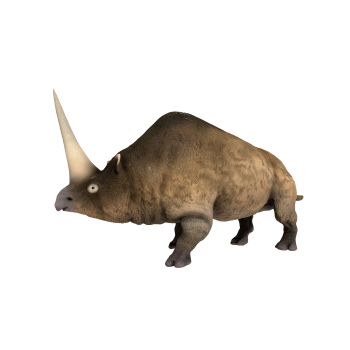
Rhinoceros (3D animated model)
The board-toothed rhinoceros (Elasmotherium) is a kind of extinct giant rhinoceros, with a shoulder height of about 3.5 meters, a body length of more than 8 meters, and a weight of more than 8 tons. The average weight is more than 5 tons. There are horns up to 2 meters on the forehead. It is the largest horned rhinoceros in history and the largest rhinoceros, and it is the representative of the Pleistocene ancient rhinoceros.
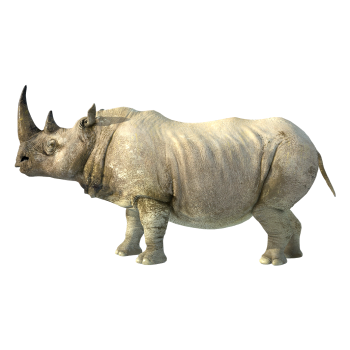
White Rhino (3D animated model)
The white rhinoceros is a mammal of the genus White Rhinoceridae in the order Rhinoceridae. The body is round and thick, the skin is thick and smooth, and the body surface is similar to gray. The head is very long, the incisors and canines are degraded, and the developed 7 pairs of cheek teeth have a very thick calcareous layer. There are two horns, one large and one small, one in front and the other. The horns are not bone, but derivatives of epithelial tissue, which are accumulated by keratinous fibers, the medullary spines are connected with ligaments to support the head. The limbs are thick and strong, with three toes in the front and rear limbs. The upper lip is flat and wide, square, so it is called wide kiss rhinoceros and square kiss rhinoceros. The male weighs more than the female.

Rhino Skull
The rhinoceros (Rhinoceros) is a large herbivorous animal in the family Mammalia (Mammalia), hoyhooe (Perissodactyla), rhinoceridae (Rhinocerotidae), known for its iconic horns and heavy skin. Five species of rhinoceros (belonging to four genera), all of which are endangered, are facing a severe survival crisis due to habitat destruction and poaching.

Rhinoceros 3D Animation Model
It is a large mammal with a long history, belonging to the family Rhinoceros in the order Rhinoceros. Known for its powerful physique, short and thick limbs, thick skin, and prominent horns. Mainly distributed in tropical and subtropical regions of Asia and Africa, there are currently 4 genera and 5 species of rhinoceros family. It is a herbivorous animal that feeds on small shrubs and herbaceous plants, and inhabits open grasslands, savannas, shrublands, or swamps. Rhinos face serious survival threats, mainly due to habitat loss and illegal poaching caused by human activities. All species of rhinoceros have been listed on the IUCN Red List of Threatened Species, and the work of protecting rhinoceros is urgent.

Little Rhinoceros
Rhinoceros is a large mammal in the family Rhinocerotidae of the order Rhinoceros. Fat and clumsy, with thick and rough skin arranged in folds; The fur is sparse and hard; The ears are oval in shape; Big and long head; Short and thick neck; No canine teeth; The tail is thin and short, and the body is yellow brown, brown, black or gray; Solid single or double horns on the head and nose; Both males and females have double horns, with females having longer horns than males. Rhinos are distributed in Asia, such as India in South Asia; It inhabits sparse grasslands and dense forests in tropical and subtropical regions. They often come out to forage in the early morning, evening, or night, with poor vision and sensitive sense of smell and hearing; Living alone often with little contact between individuals.

Rhinoceros skeleton
Rhinoceros is a large mammal in the family Rhinocerotidae of the order Rhinoceros. Fat and clumsy, with thick and rough skin arranged in folds; The fur is sparse and hard; The ears are oval in shape; Big and long head; Short and thick neck; No canine teeth; The tail is thin and short, and the body is yellow brown, brown, black or gray; Solid single or double horns on the head and nose; Both males and females have double horns, with females having longer horns than males. Rhinos are distributed in Asia, such as India in South Asia; It inhabits sparse grasslands and dense forests in tropical and subtropical regions. They often come out to forage in the early morning, evening, or night, with poor vision and sensitive sense of smell and hearing; Living alone often with little contact between individuals.

Fossil skull of woolly rhinoceros
The woolly rhinoceros is a mammal belonging to the family Rhinocerotidae in the order Neodactyla. The woolly rhinoceros is an extinct species of rhinoceros, named after its thick and dense fur covering its entire body. The woolly rhinoceros has strong bones, a long and large skull, and a head and neck that droops downwards; There is a rhinoceros horn on both the forehead and nose bones. The woolly rhinoceros has a body length of about 4 meters and a shoulder height of about 2 meters. It is covered with warm long hair and thick fur, and has a thick layer of fat under its skin. Like mammoths, they are all ice age animals that adapted to the cold climate and have traveled throughout the northern part of the Eurasian continent. They mainly inhabit the Eurasian grasslands and feed on shrubs and grasses grown in cold climates.

Rhinoceros skull
Rhinoceros is a large mammal in the family Rhinocerotidae of the order Rhinoceros. Fat and clumsy, with thick and rough skin arranged in folds; The fur is sparse and hard; The ears are oval in shape; Big and long head; Short and thick neck; No canine teeth; The tail is thin and short, and the body is yellow brown, brown, black or gray; Solid single or double horns on the head and nose; Both males and females have double horns, with females having longer horns than males. Rhinos are distributed in Asia, such as India in South Asia; It inhabits sparse grasslands and dense forests in tropical and subtropical regions. They often come out to forage in the early morning, evening, or night, with poor vision and sensitive sense of smell and hearing; Living alone often with little contact between individuals.

Popular Models
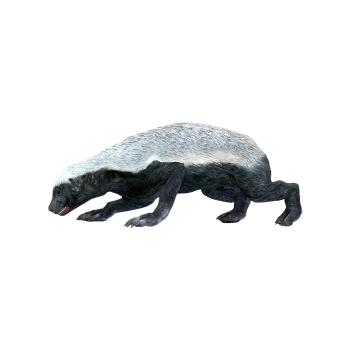
Honey Badger (3D animated model)
192 View
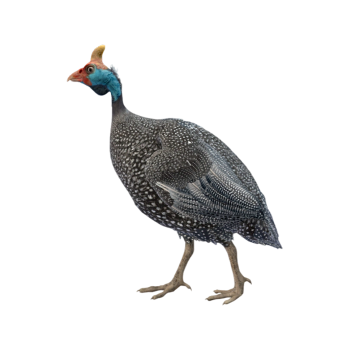
Guinea fowl (3D animated model)
163 View
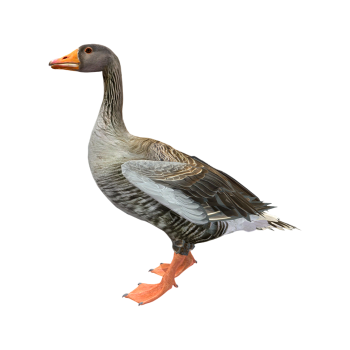
Wild Goose (3D animated model)
185 View
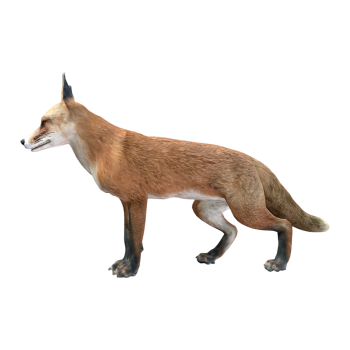
Red Fox (3D animated model)
153 View
Random Model

Indian Curry Flavor BBQ Package
610 View


(mantis) specimen
823 View



Japan Daikin Air Conditioning
829 View

Stegosaurus 3D Model Animation
693 View

Hemidactylus frenatus
879 View

Snail shell (3D printed)
1341 View